Updated for 2026
CNPLE exam prep for Canadian nurse practitioners
Comprehensive CNPLE-aligned preparation for the Canadian Nurse Practitioner Licensure Examination. Practice clinical judgment, prescribing safety, diagnostics, and lifespan care — all scoped to Canadian NP competencies.
Provisional specifications
NurseNest CNPLE preparation materials are based on published Canadian nurse practitioner competency frameworks and currently available regulatory guidance. Final CNPLE specifications, item formats, timing, and scoring methods may change once officially released by CCRNR. Always verify current requirements at ccrnr.ca and with your provincial regulatory college.
What is the Canadian Nurse Practitioner Licensure Examination
The CNPLE is Canada's national licensure examination for nurse practitioners. Administered by CCRNR (Canadian Council of Registered Nurse Regulators), it replaces the legacy Canadian Nurse Practitioner Examination (CNPE) that many provinces previously used. The CNPLE targets a 2026 live date and represents a unified national standard for NP entry-to-practice across participating jurisdictions. Always confirm current scheduling and eligibility requirements directly with CCRNR and your provincial college, as timelines may shift.
The examination uses LOFT — linear on-the-fly testing. Unlike the computerized adaptive testing (CAT) format used in NCLEX, the CNPLE delivers a fixed set of items to every candidate. There is no adaptive shutdown, no early termination, and no shift in item difficulty based on your performance. This format demands consistent accuracy across the entire item set, not peak performance in a strategic early window. Understanding the format before beginning preparation prevents the common mistake of training exclusively for a CAT-style dynamic that does not apply.
NurseNest is an independent study platform and is not affiliated with CCRNR. Content on this platform reflects NurseNest's clinical taxonomy and publicly available Canadian NP competency frameworks — it is CNPLE-aligned preparation, not an official source.
CNPLE blueprint domains and competency areas
The CNPLE is built on Canadian NP competency frameworks. CCRNR has not published explicit blueprint weighting percentages as of 2026, but the examination draws from the full scope of advanced NP practice: clinical assessment and diagnosis, therapeutic management and prescribing, health promotion and disease prevention, and professional and ethical practice. NurseNest organises preparation across these major domains with deliberate depth in the areas that require the steepest clinical reasoning integration.
Prescribing safety and pharmacotherapeutics appear throughout every clinical scenario regardless of body system — an NP candidate who has not systematically reviewed drug interactions, contraindications, renal and hepatic dose adjustment, and Canadian prescribing regulations will encounter those gaps under exam pressure. Laboratory and diagnostic interpretation functions similarly: the ability to integrate a metabolic panel, CBC, thyroid function, or urinalysis into a clinical decision is a fundamental NP competency that CNPLE-style questions probe repeatedly.
Population-specific clinical reasoning — paediatrics, older adult care, reproductive health, and mental health — adds breadth to the examination that generalist clinical experience alone does not guarantee. Candidates with a focused clinical background should systematically assess and address their population-specific gaps during preparation, not assume that clinical depth in one area transfers proportionally to others.
How NurseNest aligns with Canadian NP competencies
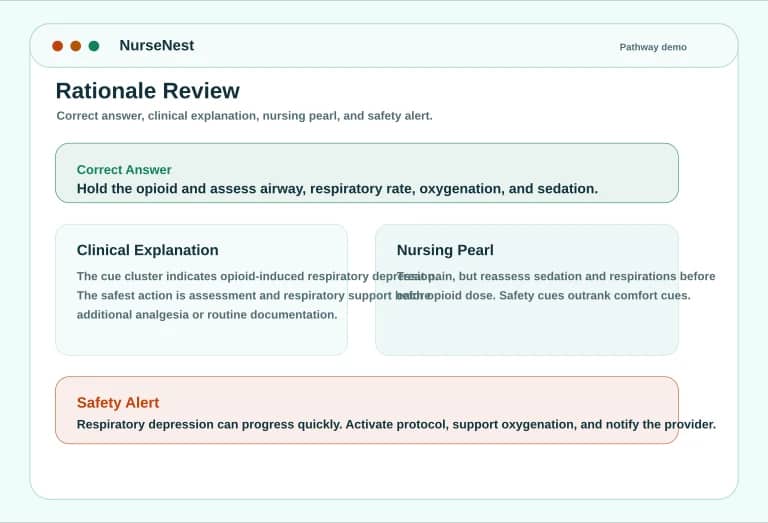
NurseNest structures CNPLE prep around the clinical reasoning demands of advanced practice. Practice questions are written as clinical vignettes — patient scenarios requiring differential diagnosis, investigation selection, management decisions, and prescribing choices within Canadian regulatory and guideline context. Rationales explain not only which answer is correct but why each distractor is inferior, building the discrimination skill that distinguishes experienced NP candidates from those who have memorised facts without integrating them.
Canadian guideline alignment is built into content at the source level. Screening recommendations reference the Canadian Task Force on Preventive Health Care rather than USPSTF. Immunisation content draws from NACI schedules. Prescribing scenarios reference the Controlled Drugs and Substances Act and Canadian formulary context. Privacy and reporting obligations reflect PIPEDA and provincial legislation rather than HIPAA. For candidates who have previously used US NP preparation resources, this Canadian-specific calibration is non-trivial — the regulatory and guideline differences affect the correct answer in a significant proportion of clinical scenarios.
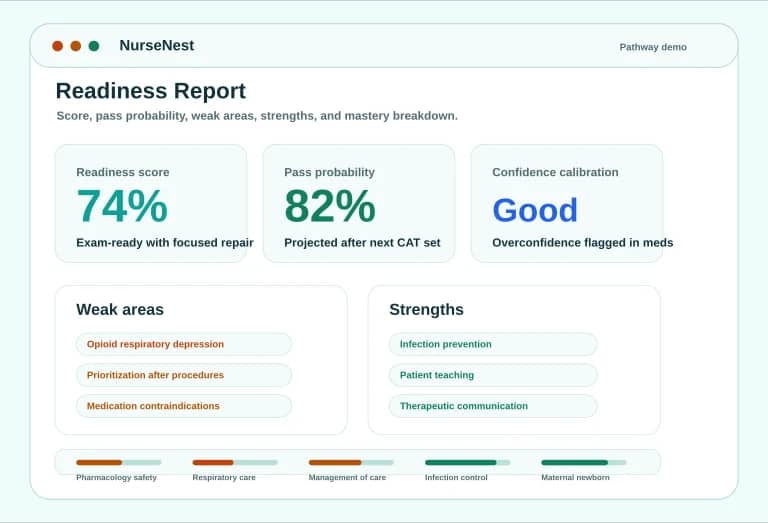
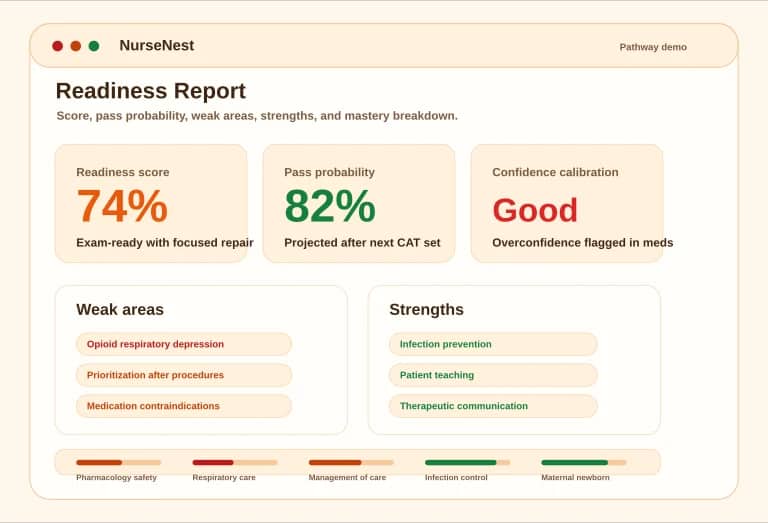
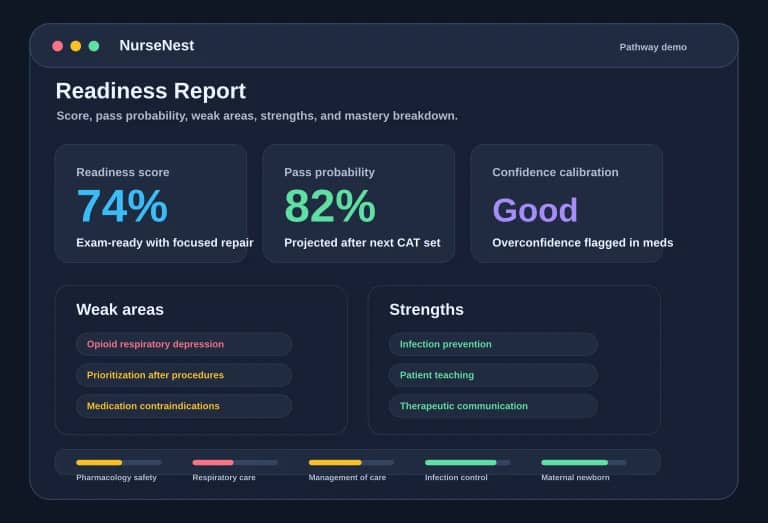
The NurseNest simulation experience is inspired by the LOFT format: fixed length, no adaptive shutdown, and timed to build the pacing discipline that the CNPLE's linear format demands. Candidates who have prepared exclusively with adaptive practice tools often discover pacing and endurance gaps on full-length simulations that domain block practice alone does not expose.
Study approach for the CNPLE
An effective CNPLE preparation plan moves through three phases. The foundation phase uses domain diagnostic data to identify weak areas, then builds accuracy through focused domain blocks paired with lesson review. The breadth phase expands coverage across all clinical areas with mixed-domain practice and introduces the first full-length timed simulation run. The pressure phase consolidates gains with two simulation runs per week, targeted remediation of remaining gaps, and deliberate attention to pacing and stamina — the elements that degrade most visibly under exam-day conditions.
Most NP graduates preparing over 12 weeks target 10 to 15 hours of study per week. Working NPs with busy clinical schedules often use 8 hours per week across a 16-week timeline. The sequencing matters more than the total hours: starting simulation before establishing domain-level accuracy produces noise rather than signal, and starting too late on simulation leaves pacing as an unresolved variable. Use the CNPLE study guide for a full timeline framework, and the practice questions hub to run your baseline diagnostic session in the first week of preparation.
Frequently asked questions
- What is the CNPLE?
- The Canadian Nurse Practitioner Licensure Examination (CNPLE) is the national entry-to-practice examination for nurse practitioners in Canada, administered under CCRNR (Canadian Council of Registered Nurse Regulators). It uses a LOFT (linear on-the-fly testing) format — a fixed-length linear exam, not a computerized adaptive test. NurseNest is an independent prep platform and is not affiliated with CCRNR.
- Who writes the CNPLE?
- NP graduates who have completed an approved nurse practitioner programme in Canada and meet their provincial or territorial college's eligibility requirements. Requirements vary by jurisdiction — confirm current eligibility rules and scheduling directly at ccrnr.ca and with your provincial regulatory college.
- How does the CNPLE differ from the NCLEX?
- The CNPLE and NCLEX are entirely separate examinations targeting different practice scopes and regulatory bodies. The NCLEX-RN tests registered nurse entry-to-practice competencies; the CNPLE tests advanced practice nurse practitioner competencies including autonomous diagnosis, prescribing, and clinical management within Canadian regulatory frameworks. Structurally, the NCLEX uses computerized adaptive testing (CAT) while the CNPLE uses LOFT (fixed-length linear). Preparation content for one does not substitute for the other.
- What does NurseNest offer for CNPLE prep?
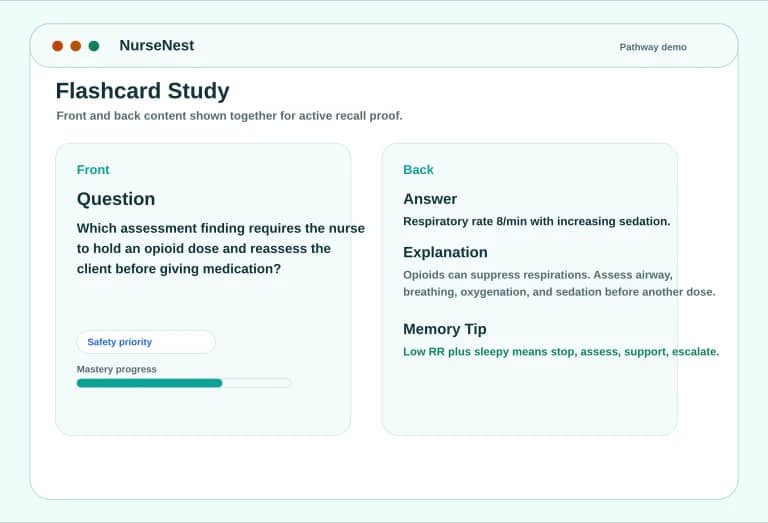
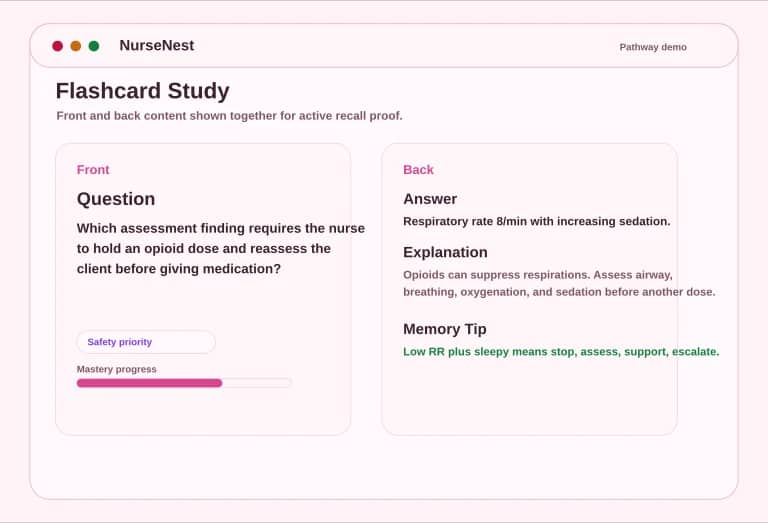
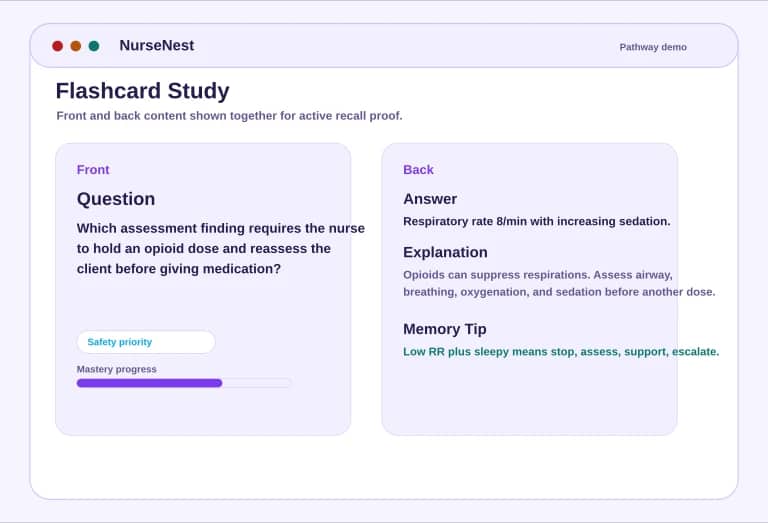
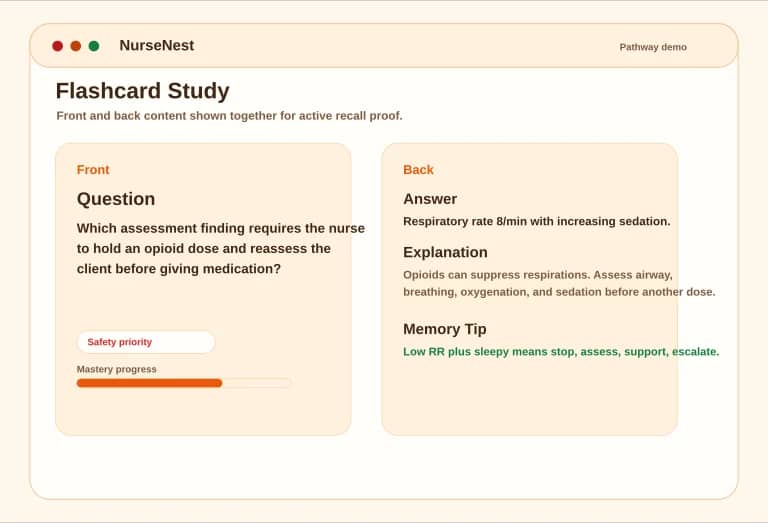
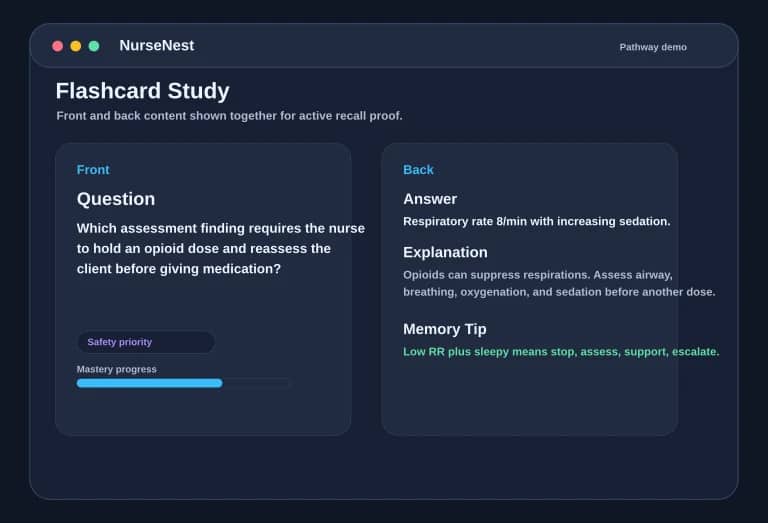
- NurseNest offers CNPLE-aligned practice questions organized by domain, clinical case studies, a linear simulation experience inspired by the LOFT format, spaced-repetition flashcard decks, and Canadian NP-specific lessons covering prescribing safety, diagnostics, clinical judgment, and lifespan care. All content is independently authored and scoped to Canadian NP competency frameworks.