Canadian NP licensure exam — 2026 authority guide
CNPLE exam prep for Canadian nurse practitioners (2026)
NurseNest includes 1,463 CNPLE-aligned NP lessons, 4,000+ Canadian-aligned NP practice questions, 1,154 flashcards (including 100 hand-authored Canadian clinical reasoning cards), and a LOFT-style simulation experience built for Canadian nurse practitioner licensure. Content covers prescribing safety, differential diagnosis, diagnostics, lifespan care, women's health, mental health, and professional practice — all framed around fixed-length CNPLE exam reasoning, not adaptive CAT.
What you will learn on this page
- ✓How to access 1,463 CNPLE-aligned NP lessons covering prescribing, diagnostics, lifespan, and professional practice
- ✓How to launch 4,000+ Canadian-aligned NP practice questions scoped to Canadian NP exam reasoning
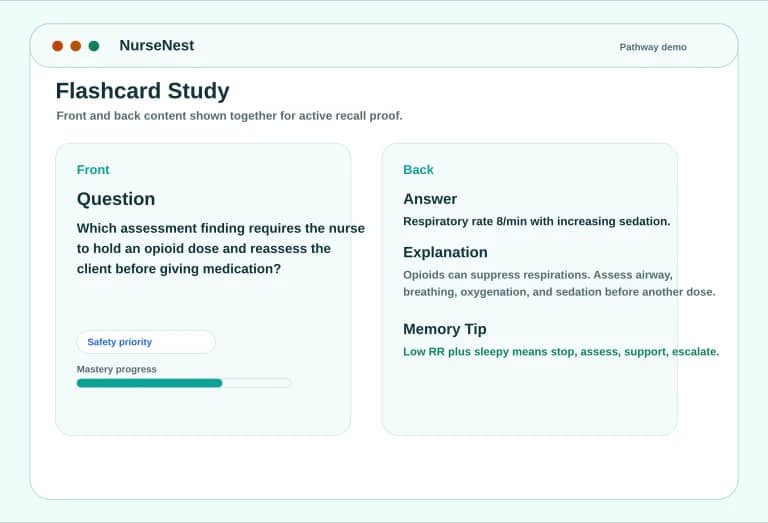
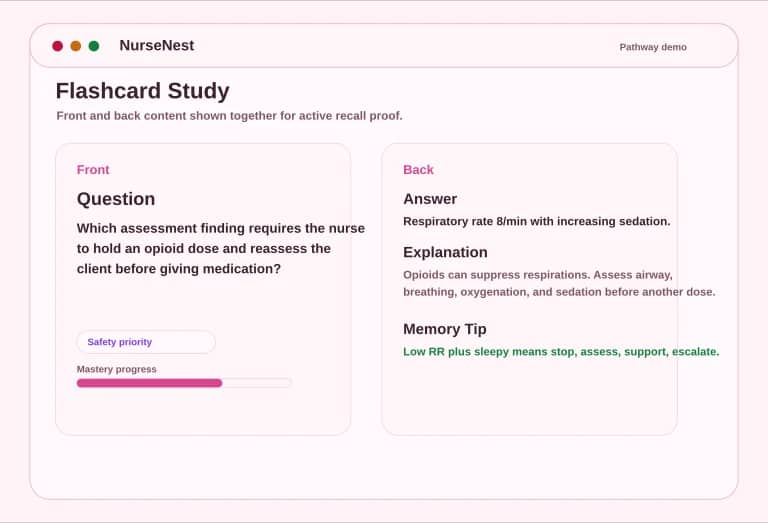
- ✓How to use 1,154 domain-targeted flashcards — including 100 hand-authored Canadian clinical reasoning cards — for spaced-repetition CNPLE prep
- ✓How to run the LOFT-style simulation with a full session report card
- ✓Canadian NP prescribing and guideline context that differs from US preparation materials
- ✓A repeatable study loop — diagnostic block, lesson review, flashcard reinforcement, retesting
Who this guide is for
NP graduates completing their CNPLE preparation, working nurse practitioners in provisional registration, and RNs exploring Canadian NP programmes who want to understand the CNPLE's clinical scope and content depth.
| Study focus | How it appears in CNPLE-style practice | Best NurseNest follow-up |
|---|---|---|
| Clinical judgment | Prioritize risk, red flags, differential diagnosis, and follow-up safety. | CNPLE clinical judgment |
| Prescribing safety | Choose therapy while checking contraindications, renal function, interactions, and monitoring. | CNPLE pharmacology |
| LOFT pacing | Practise steady fixed-length timing instead of adaptive-test assumptions. | CNPLE LOFT exam |
Related study system
Downloadable and printable assets
How this topic shows up on CNPLE-style items
CNPLE preparation should be framed around advanced practice decisions: what the NP can assess independently, when to prescribe or hold therapy, when diagnostics change management, and when referral or emergency escalation is safer than outpatient follow-up. CNPLE exam prep belongs in that clinical decision chain.
Strong candidates read the whole scenario before choosing an answer. Age, pregnancy status, renal function, current medication list, red-flag symptoms, and follow-up access can all change the safest response. NurseNest pages intentionally keep those cues visible so learners practise clinical judgment rather than answer-key recognition.
Case-based example
A patient presents with overlapping symptoms and one finding that shifts the risk picture. For cnple exam prep, the first pass is to name the most dangerous diagnosis that must not be missed, the second is to decide which information is still needed, and the third is to pick an action that fits Canadian NP scope and safety.
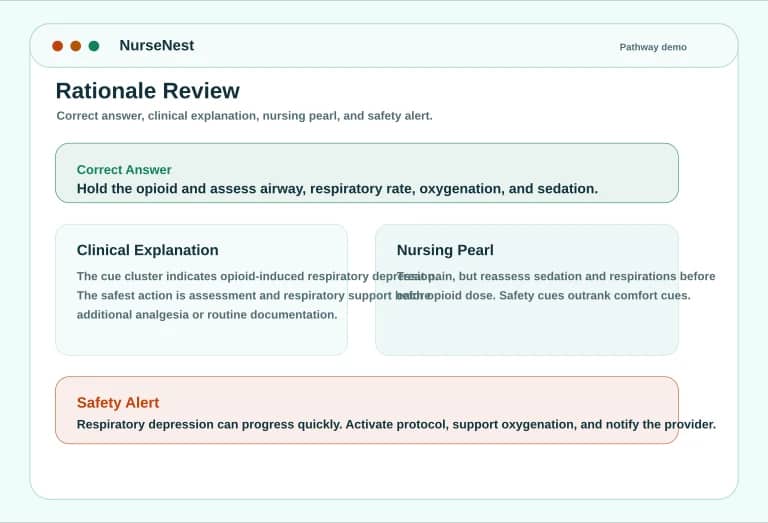
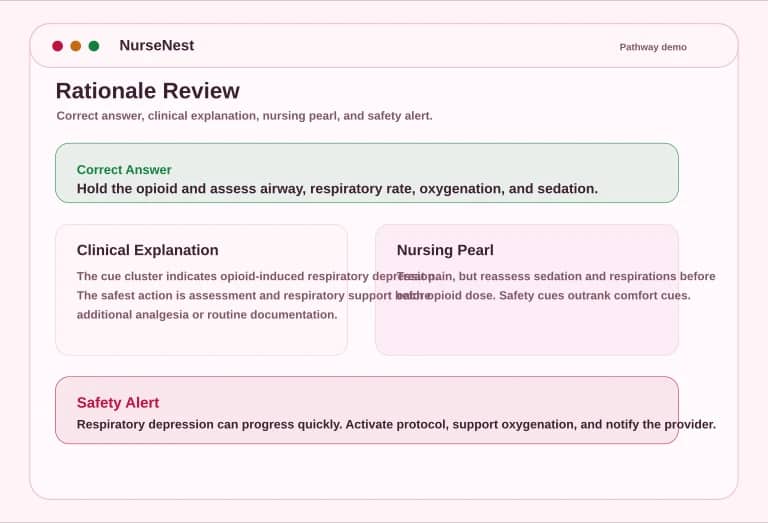
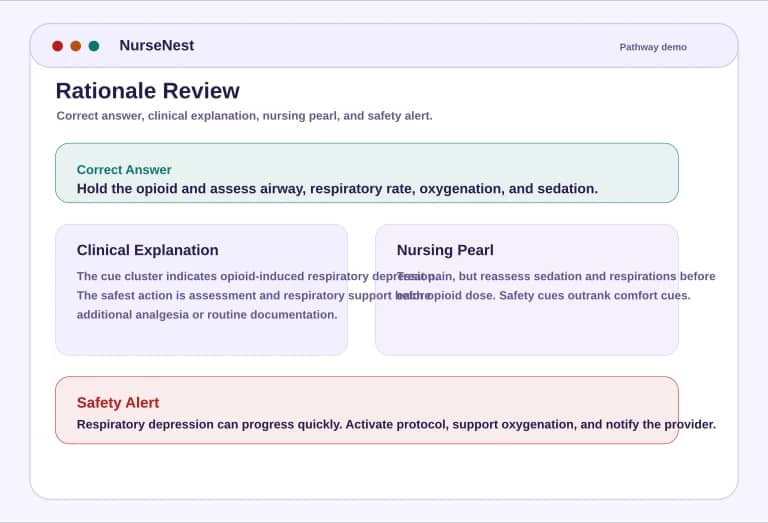
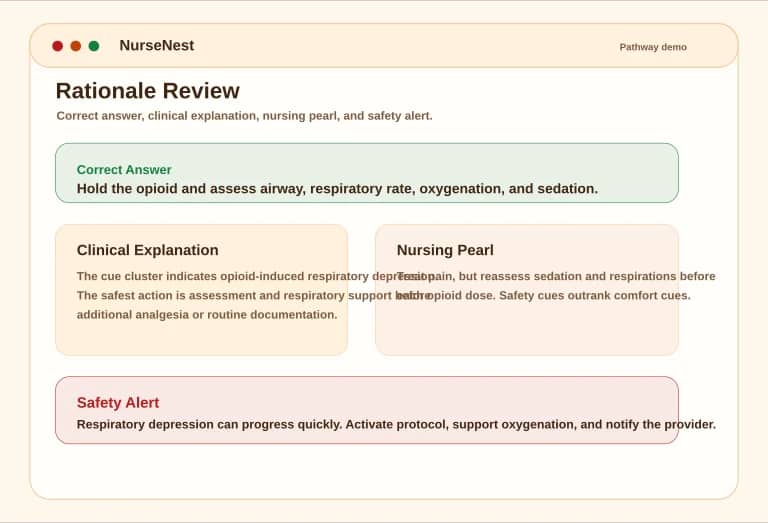
A rationale-focused review asks: what made the correct option safest, what made each distractor incomplete, and which cue would have changed the plan. That habit builds durable reasoning for new stems instead of memorizing one vignette.
Clinical judgment study loop
Run a 20 to 40 question diagnostic set, write down every miss as a rule, review the linked lesson or flashcard set, then retest within 48 hours. Keep mixed blocks in the rotation so you practise switching between assessment, management, health promotion, and professional accountability.
For the overview page, build a weekly rotation that alternates mixed practice questions, Canadian NP lessons, and flashcards. The fastest gains usually come from reviewing why tempting management options are incomplete.
Recommended study order
- 1Run a 25–40 question mixed diagnostic block to measure baseline accuracy in this area
- 2Review the lesson content for every missed concept — read the rationale, not just the answer
- 3Complete a second focused block of 20 questions in this domain
- 4Flag difficult items and add them to a spaced-repetition flashcard deck
- 5Return to mixed-domain blocks after 48 hours to confirm retention
Common mistakes to avoid
- ⚠️Treating CNPLE like NCLEX-style CAT when the CNPLE preparation target is fixed-length LOFT-style stamina.
- ⚠️Using US-only guideline memory without checking Canadian screening, prescribing, privacy, and regulatory context.
- ⚠️Reviewing rationales only for the correct option instead of understanding why plausible distractors are unsafe.
- ⚠️Studying pharmacology, diagnostics, and clinical judgment as separate silos instead of integrated NP decisions.
What to expect on exam day
- 📋Expect clinical vignettes that require prioritizing incomplete but meaningful patient data.
- 📋Budget time evenly; do not spend exam-day energy trying to identify an adaptive pattern.
- 📋Recheck age, pregnancy, renal function, medication allergies, and red flags before committing to management.
- 📋Use elimination by safety: first remove options that delay escalation, ignore contraindications, or exceed scope.
Frequently asked questions
- How should I start studying for CNPLE?
- Start with a mixed diagnostic set, tag every miss by clinical concept, then use short lesson blocks before retesting. That sequence shows whether the issue is knowledge, cue recognition, or exam strategy.
- Are NurseNest CNPLE questions official exam questions?
- No. NurseNest is independent and does not claim to provide official or recalled exam items. The questions are educational practice items designed around the clinical reasoning, terminology, and pacing demands learners should prepare for.
- What format should I practise for CNPLE?
- CNPLE preparation should include fixed-length timed sets because LOFT-style practice rewards consistent pacing across the whole exam. Use timed practice after you understand the topic, then review rationales carefully enough to explain why the distractors are less safe, less complete, or less exam-specific.
- Where should I practise after reading this page?
- Use the linked CNPLE question hub for active recall, then move into lessons, flashcards, and exam-mode practice so the content becomes usable under time pressure.
- How hard is the CNPLE?
- The CNPLE is challenging because it tests nurse practitioner judgment, not isolated nursing recall. Candidates need to connect differential diagnosis, prescribing safety, diagnostics, follow-up, and provincial practice context inside case-based stems.
- Is the CNPLE adaptive?
- CNPLE preparation should not be treated like a CAT exam. Learners should build fixed-length stamina, steady pacing, and consistent clinical reasoning across a full exam block.
- How many questions are on the CNPLE?
- Question counts and administrative details can change, so candidates should confirm current details with the exam administrator or provincial regulator. For study, practise long timed sets so pacing and fatigue are part of preparation.
- How long should I study for the CNPLE?
- Most candidates benefit from an 8 to 12 week plan that combines diagnostic questions, Canadian NP lessons, prescribing review, case-based practice, and final timed simulation. Shorter plans should still include mixed-question review, not only notes.